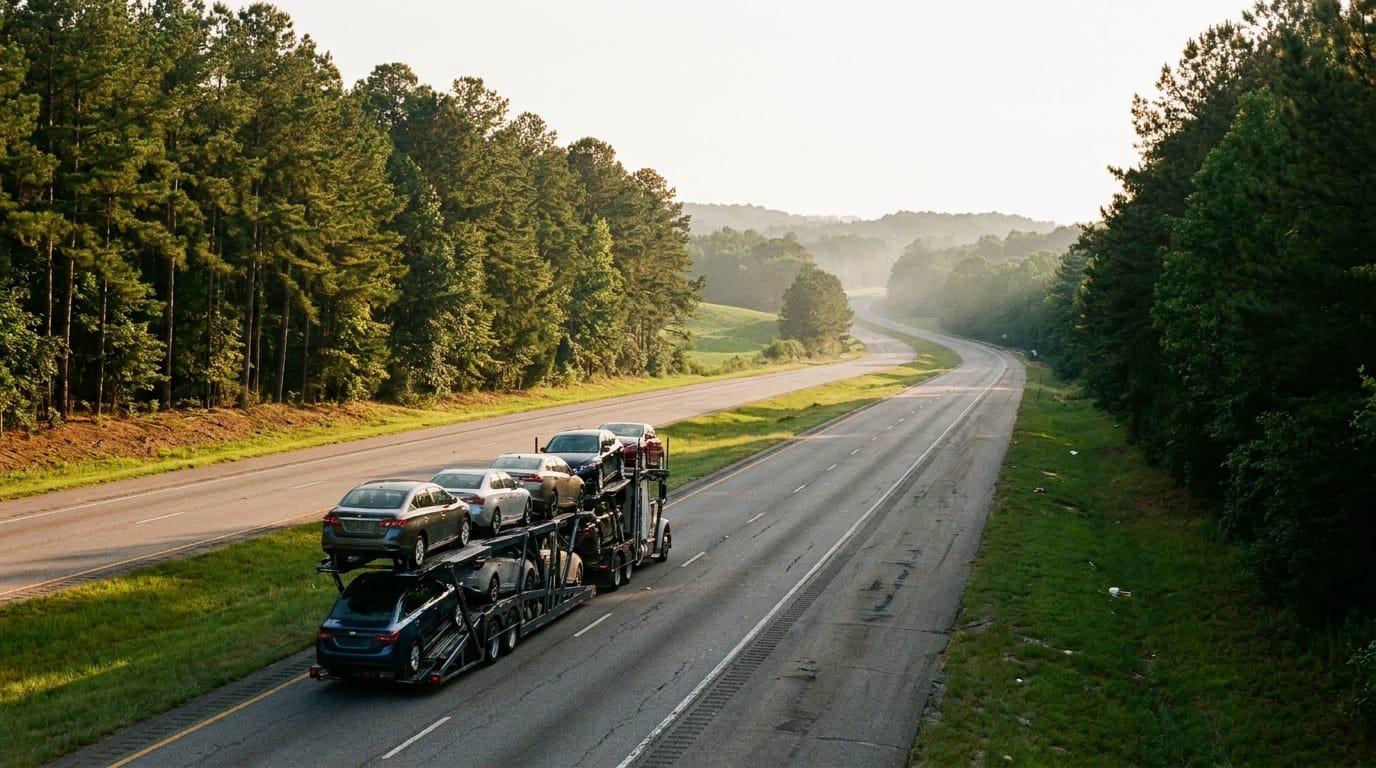
West Virginia car shipping takes local knowledge, because almost the entire state is mountainous. The interstates are excellent: I-64, I-77 and I-79 meet near Charleston, and I-68 and I-81 serve the north and the Eastern Panhandle. Away from them, roads follow creeks and ridgelines with sharp switchbacks, narrow bridges and very little room for a long truck. Matching the pickup point to what a car carrier can safely reach is the key to a smooth shipment.
Shipping demand is steady and varied. WVU students and staff move in and out of Morgantown each year, and Marshall University does the same in Huntington. The Eastern Panhandle around Martinsburg and Charles Town has grown with commuters to the Washington, DC area. Retirees head south for the winter, and many people who grew up in the state move cars home or away as family needs change. Energy and health care jobs around Charleston and Morgantown bring new arrivals from other states as well.
Sahara Auto Transport arranges open and enclosed shipping throughout West Virginia. We will ask about your road, your driveway and whether a truck that can stretch past 70 feet can turn around, and if it cannot, we will find a practical meeting spot along a main route. You get honest timing that accounts for mountain weather and a dispatcher who keeps you informed until delivery. If your vehicle is lowered, oversized or not running, mention it when you request a quote so the right truck is assigned.
Pickup and delivery
Where we ship in West Virginia
Charleston
The capital sits where I-64, I-77 and I-79 converge in the Kanawha Valley, making it the easiest pickup point in the state.
Huntington
On the Ohio River near the Kentucky and Ohio borders, an I-64 city with Marshall University and frequent moves to neighboring states.
Morgantown
WVU's home on I-79 and I-68, with student move-in in August and hilly neighborhoods that can be tough for large trucks.
Martinsburg and Charles Town
The fast-growing Eastern Panhandle on I-81, tied closely to Northern Virginia, Maryland and DC commuters.
Parkersburg
An Ohio River city on I-77, connected to the Marietta, Ohio area and a common stop on runs north toward Cleveland.
Wheeling
In the Northern Panhandle on I-70, closer to Pittsburgh than to Charleston, and often grouped with Pittsburgh area loads.
Routes our carriers use
Main corridors in and out of West Virginia
I-64
Crosses from Kentucky through Huntington and Charleston, then east through Beckley and the mountains toward Virginia.
I-77
Runs from Ohio through Parkersburg to Charleston, then shares the West Virginia Turnpike south to Princeton and Virginia.
I-79
Connects Charleston with Clarksburg, Morgantown and Pittsburgh, the main north to south route through the center of the state.
I-68
Leaves I-79 at Morgantown and crosses into western Maryland toward Hancock and I-70.
I-81
Clips the Eastern Panhandle through Martinsburg, linking the state with the Shenandoah Valley and Pennsylvania.
Ports and logistics hubs
- Heartland Intermodal Gateway near Prichard in Wayne County, a Norfolk Southern rail facility
- Pittsburgh area terminals, a consolidation point for northern West Virginia loads
- Columbus, Ohio, a major logistics center within a few hours of Huntington and Parkersburg
Transit times
How long shipping from West Virginia takes
Chicago, IL
480 to 520 miles · 2 to 3 days
Est. $650 to $825
New York, NY
500 to 550 miles · 2 to 3 days
Est. $675 to $850
Orlando, FL
850 to 900 miles · 2 to 4 days
Est. $850 to $1,075
Houston, TX
1,150 to 1,250 miles · 3 to 5 days
Est. $975 to $1,250
Phoenix, AZ
1,950 to 2,050 miles · 5 to 7 days
Est. $1,225 to $1,575
Transit starts once your vehicle is loaded. Prices are November 2026 estimates for a running sedan on an open carrier, not quotes. Ocean shipments to Alaska and Hawaii are priced individually.
Mountain snow, flash floods and foliage
Winter can be serious at higher elevations. The Allegheny Highlands around Canaan Valley, Snowshoe and Davis can see heavy snow, and I-64 between Beckley and Lewisburg and I-68 near the Maryland line both deal with snow and ice. Storms can stall carriers for a day, especially on east to west routes. In the valleys, mild afternoons can turn icy overnight, so early morning pickups on side roads may need to wait for sun.
Spring and summer storms bring a different risk. Heavy rain can cause flash flooding in narrow hollows and along creeks, washing out secondary roads with little warning. Fall foliage draws visitors to the New River Gorge area and US-219, and October is also when snowbirds from the state start heading toward Florida and the Carolinas, filling southbound trucks.
Local know-how
Tips for shipping a car in West Virginia
- The West Virginia Turnpike on I-64 and I-77 between Charleston and Princeton is the state's main toll road and accepts E-ZPass, which is useful if you drive the car afterward.
- If your home is up a hollow or on a gravel road, plan to meet the carrier in town or at a wide lot near the closest US highway or interstate exit.
- Most states expect registration within about 30 days of residency. West Virginia also requires an annual safety inspection, so check with the WV DMV for the current steps.
- WVU and Marshall move-in weeks in August fill up local schedules. Book early if you are shipping a student's car.
- In winter, check WV511 before your pickup day for closures on I-64, I-68 and I-79.