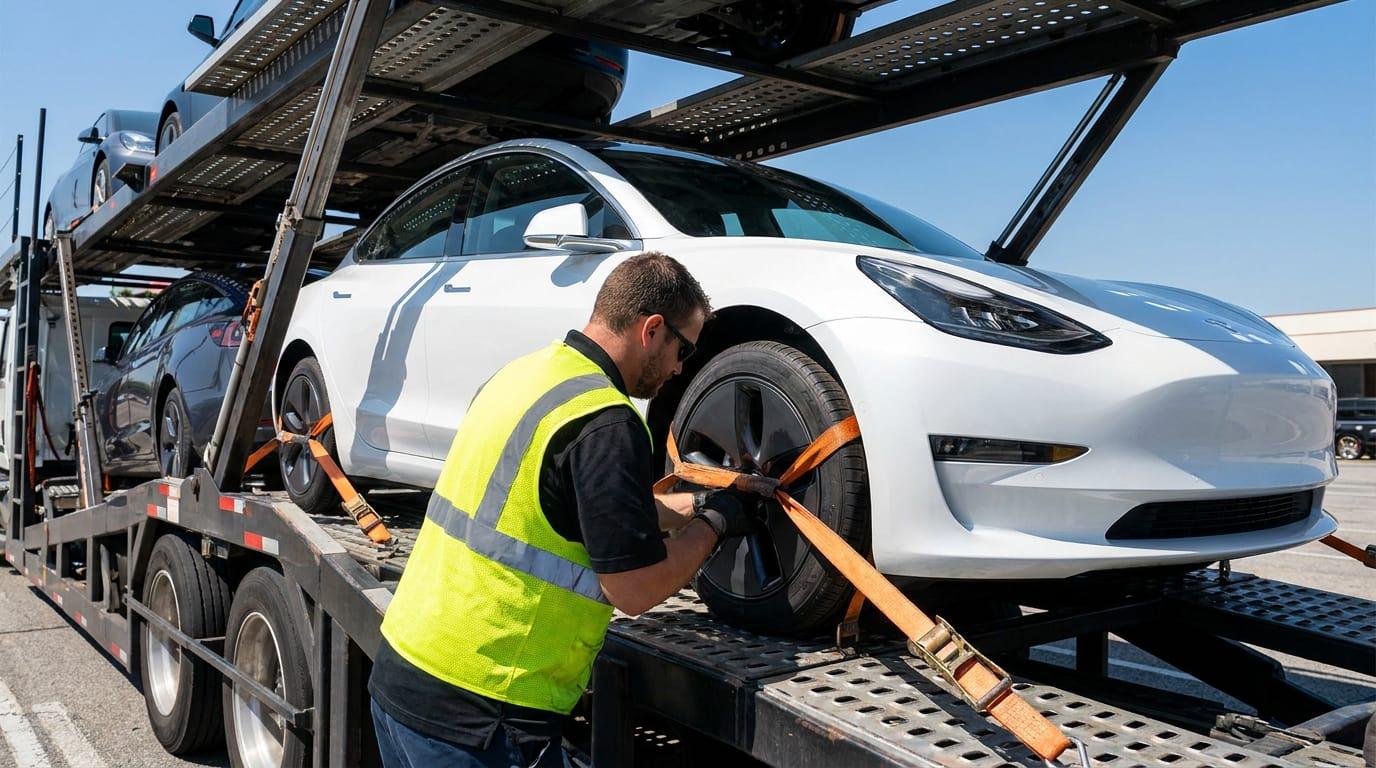
Shipping an electric vehicle is mostly like shipping any car, with a few important exceptions. EVs are heavy, they need enough charge to drive on and off the truck, and many have specific steps for being rolled or winched. Sahara Auto Transport arranges electric vehicle and Tesla transport with carriers who understand those details. We ship the Tesla Model 3, Model Y, Model S, Model X, and Cybertruck, along with EVs from Rivian, Ford, Chevrolet, Hyundai, Kia, Lucid, and other brands.
Weight is the first thing we plan for. A large battery pack can add several hundred to well over a thousand pounds compared with a similar gas vehicle, and carriers must stay within legal weight limits for each load. We tell the carrier exactly what is coming so the trailer can be planned around it. Large electric trucks and SUVs may also need a particular position on the trailer.
Charge level is the second. Most carriers prefer EVs to arrive at pickup with roughly 30 to 50 percent state of charge. That leaves enough to load, unload, and reach a charger, without hauling a full battery. We walk you through prep, including transport or tow mode, and every car is inspected and documented on the Bill of Lading at both ends of the trip.
Who ships electric vehicles with us
- Owners relocating with a Tesla or another EV
- Buyers picking up an EV from an out-of-state dealer or private seller
- Shoppers who bought a used electric car online
- Snowbirds bringing an EV to their winter home
- Businesses moving electric vehicles between locations
What you get
Why customers choose Sahara for this
Right state of charge
We help you target about 30 to 50 percent charge, so the car can be driven on and off the truck without a full battery in transit.
Transport mode know-how
Many EVs have a transport or tow mode that lets the wheels roll freely for loading. We share the steps for your model with the driver.
Weight-aware planning
Heavy battery packs change how a trailer is loaded. We give carriers accurate vehicle details so your EV is placed correctly and the load stays legal.
Battery-safe handling
Battery packs sit low. Drivers use suitable ramp angles and avoid contact points that could reach the pack or underbody panels.
Enclosed option for new EVs
Taking delivery of a brand-new or high-end EV? Enclosed transport keeps glass roofs, fresh paint, and large wheels protected.
Step by step
How Electric Vehicle & Tesla Transport works
Mile 01
Tell us the model and route
Share the year, make, model, trim, and any aftermarket wheels or accessories. We quote open or enclosed transport for free, with no obligation.
Mile 02
Prep the EV
Charge to roughly 30 to 50 percent, turn off camera security and climate features that run while parked, and set aside a key card or key fob for the driver.
Mile 03
Pickup and loading
The driver inspects the car, records its condition on the Bill of Lading, and drives it aboard, or uses transport or tow mode and a winch if it cannot be driven.
Mile 04
Delivery and charge check
The carrier calls ahead. You inspect the car, confirm it powers on without warnings, and plan a stop at a charger if needed.
Pricing
What shapes your price
- 01Vehicle weight, since heavier EVs use more of a trailer's capacity
- 02Model size, such as a compact sedan versus a full-size electric truck
- 03Open or enclosed transport
- 04Distance and demand on your route
- 05Whether the vehicle powers on or needs to be winched
- 06Pickup and delivery flexibility
EV shipping prep: charge, keys, and settings
Electric vehicles rely on a 12-volt or low-voltage battery to wake up and unlock, so make sure that battery is healthy before pickup. Turn off features that draw power while parked, such as camera-based security monitoring and cabin overheat protection, and pause scheduled charging or preconditioning. Leave the driver a key card, key fob, or physical key, because phone-as-key access will not work once you hand off the car.
If the vehicle cannot be driven, transport or tow mode keeps the wheels rolling freely so it can be winched aboard. Mode names and steps vary by brand, so check your owner's manual and share the instructions with us. Remove charging adapters and portable cables unless you want them in the trunk, and remember that personal items are not covered by carrier insurance. At delivery, check the battery level and look for warning messages before you sign.