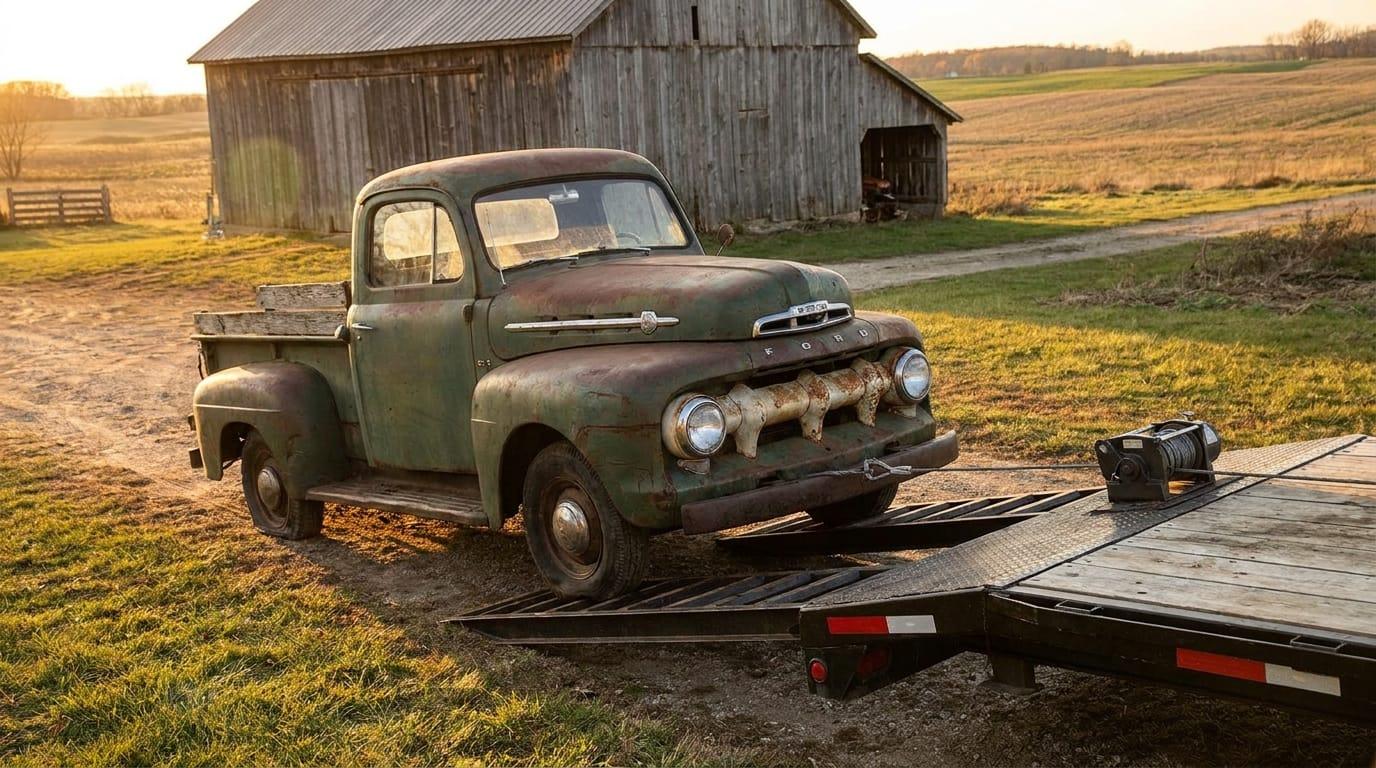
A car that will not start can still travel across the country. Non-running car shipping simply calls for different equipment and a bit more planning. Instead of driving the vehicle onto the trailer, the driver uses a winch to pull it up the ramps and into position, and at some terminals a forklift is used for loading. Sahara Auto Transport matches inoperable vehicles with carriers that have the right gear, so your project car, auction purchase or broken-down daily driver gets moved without drama.
The key detail is condition. Most carriers can handle a car that does not run as long as it can still roll, steer and brake. If a wheel is locked, the steering is seized or the car is missing tires, it may need a flatbed or extra equipment, and we need to know before we dispatch. Tell us honestly what works and what does not, and we will plan around it so pickup day goes smoothly.
Who ships a non-running vehicle
- Buyers of salvage, insurance or auction vehicles
- Restorers moving project cars to a shop or new home
- Owners sending a broken-down car to a trusted mechanic
- Families relocating with a car that no longer runs
- Collectors buying a barn find from out of state
What you get
Why customers choose Sahara for this
Winch-equipped carriers
We dispatch trailers with winches so drivers can load and unload a vehicle that cannot drive itself.
Honest condition review
We ask the right questions about rolling, steering and braking up front so the correct equipment shows up.
Auction and salvage pickups
Sahara works with auction yards and salvage lots across the country to collect inoperable vehicles on your behalf.
Open or enclosed options
Ship a rough project car on an open trailer or protect a valuable restoration in an enclosed carrier with liftgate or winch loading.
Door-to-door where possible
We deliver right to your driveway or shop when access allows, saving you a tow on the receiving end.
Step by step
How Non-Running Car Shipping works
Mile 01
Describe the vehicle's condition
Tell us why the car does not run and whether it rolls, steers and brakes. Mention flat tires, missing parts or body damage so we can match the right trailer.
Mile 02
Dispatch the right equipment
Sahara assigns a carrier with a winch, or a flatbed if needed, and confirms pickup access such as driveway space, gate codes or auction yard hours.
Mile 03
Winch loading and transport
The driver inspects the car, notes its condition on the bill of lading, winches it onto the trailer, secures it and heads to the destination.
Mile 04
Careful unloading at delivery
At drop-off the car is lowered off the trailer with the same equipment, and you check it against the pickup report before signing.
Pricing
What shapes your price
- 01Whether the vehicle can roll, steer and brake
- 02Need for a winch, flatbed or forklift loading
- 03Pickup location, such as a home, shop, salvage yard or auction lot
- 04Distance and route between pickup and delivery
- 05Vehicle size and weight
- 06Open or enclosed carrier
How to prepare an inoperable car for pickup
Inflate the tires if they will hold air, and make sure the parking brake releases and the car can be put in neutral. Leave the keys with the vehicle, even if it does not start, because drivers often need them to unlock the steering wheel and steer while winching. Remove loose parts, personal items and anything rattling around in the cabin or trunk. If a part has been removed, such as a hood or door, let us know so it can be secured or left behind.
Be specific when you describe the car. A vehicle that rolls and steers is a routine winch load, but one with a locked wheel, broken axle or no tires needs extra equipment, and surprises at pickup can mean delays or a second dispatch. For auction and salvage yard pickups, have the release paperwork and lot number ready, and check the yard's storage deadlines. Sahara will coordinate timing so your car leaves the lot before extra fees start.