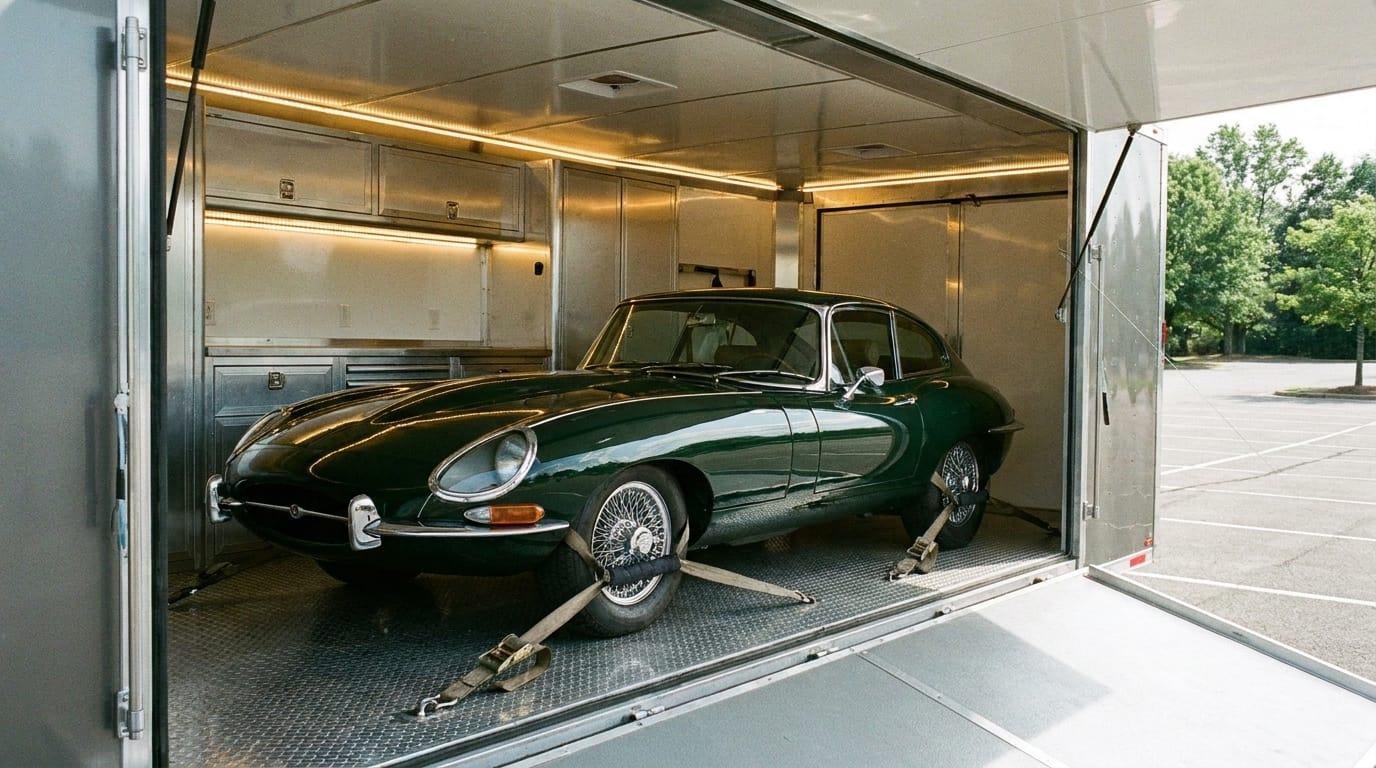
Enclosed car shipping puts your vehicle inside a covered trailer instead of on an open deck, so it travels shielded from rain, hail, road salt, kicked-up gravel, and harsh sun. At Sahara Auto Transport, we arrange enclosed car transport for owners who cannot shrug off a single rock chip: collectors, exotic car owners, new buyers who just paid for paint protection film, and anyone shipping a car with real sentimental value. You get the same nationwide reach as standard shipping, with a far more controlled environment for the vehicle you care about most.
Enclosed carriers usually haul fewer vehicles per load than a typical open hauler, which means less loading and unloading along the route and more attention per car. Many enclosed trucks use hydraulic liftgates rather than steep ramps, a genuine advantage for low-clearance sports cars and lowered builds. Drivers who run enclosed routes tend to specialize in high-value freight and are comfortable with soft tie-downs and wheel nets. Expect to pay more than open transport, and in return expect a quieter, cleaner, lower-risk trip.
Who chooses enclosed transport
- Classic, antique, and collector cars headed to a new home, show, or restoration shop
- Exotic and luxury vehicles with low ground clearance or custom paint
- New cars with fresh ceramic coating or paint protection film
- Snowbirds who want their winter car to arrive clean instead of salted
- Vehicles bound for auctions or concours events where condition is everything
What you get
Why customers choose Sahara for this
Full weather protection
Hard-sided and soft-sided trailers keep out rain, snow, hail, UV rays, and road salt, so the car you hand over is the car you get back.
Liftgate loading
Many enclosed carriers use hydraulic liftgates, so low cars are raised level instead of scraping up a steep ramp.
Smaller, calmer loads
Fewer cars on the trailer means fewer stops, less shuffling, and a driver who can focus on each vehicle.
Specialist drivers
Enclosed routes attract experienced haulers who know how to secure a collector car with soft straps through the wheels, not the frame.
Documented condition
A written Bill of Lading inspection at pickup and delivery records your car's condition at both ends of the trip.
Privacy on the road
A closed trailer keeps your vehicle out of view on the highway and at overnight truck stops.
Step by step
How Enclosed Car Shipping works
Mile 01
Tell us about the car
Share the year, make, model, and any modifications. Mention spoilers, splitters, or lowered suspension so we can match you with the right trailer and loading method.
Mile 02
We book an enclosed carrier
Sahara assigns a vetted, insured enclosed hauler on your route and confirms your pickup window. In most cases, no deposit is due until a carrier is assigned.
Mile 03
Inspection and careful loading
The driver walks around the car with you, notes its condition on the Bill of Lading, then loads it by liftgate or low-angle ramp and secures it with soft straps.
Mile 04
Covered delivery and sign-off
At delivery, you compare the car against the pickup report before signing. Any concern gets written down on the spot, which keeps the record clear for everyone.
Pricing
What shapes your price
- 01Distance and route, since busy corridors between major metros cost less per mile than remote destinations
- 02Trailer type, with hard-sided trailers usually priced above soft-sided ones
- 03Vehicle size, weight, and ground clearance, especially if a liftgate is required
- 04Season, because snowbird months and summer peaks raise demand for enclosed space
- 05Vehicle value, since some high-value cars call for carriers with higher cargo coverage
- 06How flexible your pickup and delivery dates are
Hard-sided vs. soft-sided enclosed trailers
Not every enclosed trailer is built the same. Hard-sided trailers have solid aluminum or steel walls and roofs, offering the strongest protection against impact and weather. Soft-sided trailers use heavy-duty curtains over a frame. They still keep out rain, dust, and debris, and they usually cost a bit less. For most classics and luxury cars, either works well. For an irreplaceable collectible or a car going straight onto a show field, many owners prefer hard-sided.
To prepare, wash the car so the inspection is accurate, keep the fuel tank around a quarter full, and remove loose items, toll tags, and accessories that could shift. Tell the driver about any quirks, like a sensitive alarm, a kill switch, or a clutch that engages high. If your car sits extremely low, measure its front clearance and share the number when you request a quote so we book the right equipment.