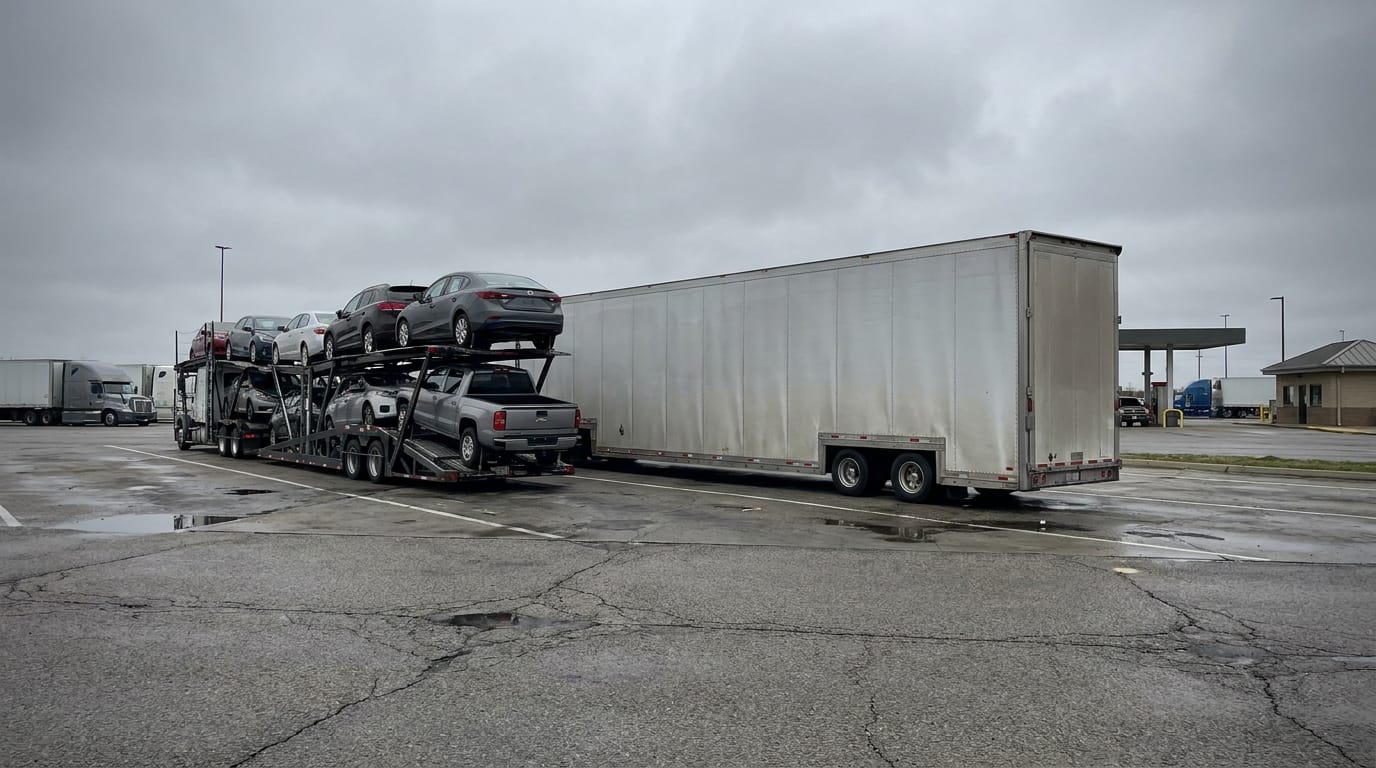
Open vs enclosed car transport comes down to a simple trade: open carriers are the affordable, widely available standard for everyday vehicles, while enclosed carriers cost more but shield your car from weather, dust, and road debris. Most daily drivers ship safely on open trailers. Enclosed transport makes sense for classic, exotic, luxury, and low-clearance cars, or any vehicle where a rock chip would be a real problem. Here is how to decide which option fits your car and your budget.
What Is Open Car Transport?
Open car transport is what you picture when you see a big double-deck car hauler on the interstate. Vehicles ride on an uncovered trailer, usually seven to ten at a time, secured by straps or chains. It is the most common way to ship a car in the United States, and it is how dealerships move most new inventory.
Because so many open carriers are on the road, they are easier to schedule and cost less per vehicle. The tradeoff is exposure. Your car will see the same sun, rain, and highway grime it would if you drove it yourself, although it will not be adding miles or wear to its own engine and tires.
What Is Enclosed Car Transport?
Enclosed car transport moves your vehicle inside a fully covered trailer with hard or soft sides. These trailers typically hold fewer vehicles, often somewhere between one and seven depending on the rig. Many use hydraulic liftgates instead of steep ramps, which matters for cars with low front splitters or long overhangs.
Enclosed carriers often specialize in high-value vehicles, and their drivers are used to handling collector cars, exotics, and show vehicles. Many also carry higher cargo insurance limits than a typical open carrier, though you should always confirm the exact coverage before booking.
Open vs Enclosed Car Transport: Side-by-Side Comparison
| Feature | Open Transport | Enclosed Transport |
|---|---|---|
| Relative cost | Lower, the budget standard | Commonly 30 to 60 percent more |
| Protection from weather | Exposed to sun, rain, and snow | Fully shielded |
| Protection from road debris | Some exposure to dust and small debris | Fully shielded |
| Carrier availability | Very high on most routes | More limited, may need more lead time |
| Typical vehicles per load | About 7 to 10 | About 1 to 7 |
| Loading method | Ramps | Often liftgates, better for low clearance |
| Typical insurance limits | Standard cargo coverage | Often higher limits |
| Best for | Daily drivers, used cars, dealer stock | Classic, exotic, luxury, and show cars |
How Much More Does Enclosed Car Shipping Cost?
As a general rule, enclosed auto transport commonly costs roughly 30 to 60 percent more than open transport on the same route. The gap comes from simple math: an enclosed trailer carries fewer cars, so each vehicle covers a larger share of the fuel, insurance, and driver costs. Specialized equipment like liftgates and soft straps adds to the carrier's expenses too.
Where you fall within that range depends on the route, the season, and how many enclosed carriers are running your lane. Popular corridors between major cities usually have better enclosed availability and more competitive pricing. Rural or less traveled routes may cost more and take longer to schedule.
It also helps to weigh the extra cost against what you are protecting. On an older commuter car, paying a premium for enclosed service may not make financial sense, since normal road exposure rarely causes more than a layer of dust. On a restored classic or a six-figure sports car, that same premium is a small fraction of the vehicle's value and can help you avoid paint correction or repair bills that cost far more. Thinking of enclosed transport as a form of protection, rather than a luxury, makes the decision much clearer.
When Open Transport Makes the Most Sense
Open carriers move the majority of vehicles in the country every day, and the vast majority arrive in the same condition they left. Open transport is usually the smart choice when:
- You are shipping a daily driver, commuter car, or family SUV
- Your budget is the top priority
- You need the widest choice of pickup dates and the fastest scheduling
- The car already has normal wear, like minor chips or older paint
- You are relocating for work, school, or a military move and want a reliable, cost-effective option
- You are moving a used car you just bought online or at auction
When Enclosed Car Transport Is Worth It
Is enclosed car shipping worth it? For the right vehicle, absolutely. The extra cost buys protection and peace of mind that open transport cannot match. Consider enclosed service when:
- You own a classic or vintage car with original paint or a fresh restoration
- The vehicle is an exotic, supercar, or high-end luxury model
- Your car has very low ground clearance, a front splitter, or aero parts
- You are shipping a show car or a vehicle headed to an auction, concours, or collector
- You are moving through winter weather and want to avoid road salt and slush
- The car has custom paint, a wrap, or ceramic coating you want to keep perfect
- You simply want the highest level of protection and are comfortable with the higher price
Questions to Ask Before You Choose
Still on the fence? Walk through these questions. Your answers will usually point clearly toward one option or the other.
- What would it cost to repair a scratch, chip, or paint blemish on this car?
- Is the car's value tied to original or concours-level condition?
- Does the vehicle have low clearance that makes steep ramps risky?
- What is the weather like along the route this time of year?
- How flexible are your dates, given that enclosed carriers may need more lead time?
- What cargo insurance limit does the carrier carry, and does it match your car's value?
If the honest answer to the first two questions is that minor cosmetic wear would not matter much, open transport is probably the right fit. If a single chip would hurt the car's value or your enjoyment of it, enclosed is the safer bet.
Compare Open and Enclosed Quotes With Sahara
You do not have to decide blindly. Sahara Auto Transport can quote both open and enclosed options for the same route so you can see the real difference in price and timing side by side. We ship in all 50 states and match each vehicle with carriers suited to the job, from everyday sedans to rare collector cars.
Request a free quote online or call 888-509-8666, and a Sahara team member will walk you through the tradeoffs for your specific car, route, and schedule.