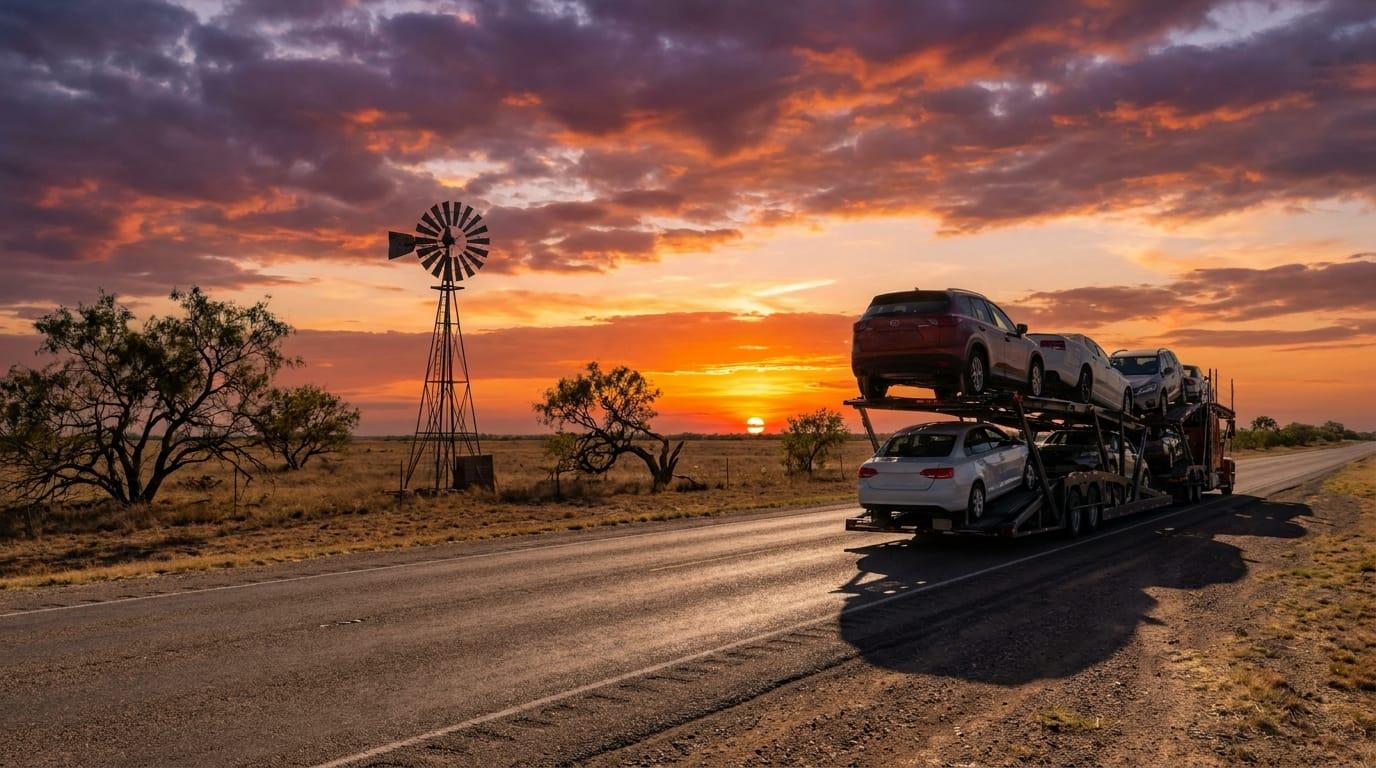
California to Texas car shipping has become one of the busiest moving lanes in the country. Over the past decade, a steady wave of households has left Los Angeles, the Bay Area and San Diego for Austin, the Dallas to Fort Worth metroplex, Houston and San Antonio, drawn by lower housing costs, no state income tax and employers moving their headquarters. Most of these movers are working families and tech professionals who need a reliable car the week they arrive, not a three-day solo drive across the desert.
Pickup in California varies a lot by neighborhood. Suburbs in the Inland Empire, Orange County and the Central Valley are usually easy for a full carrier to reach. Hillside streets in Los Angeles, the steep blocks of Russian Hill and dense parts of the Bay Area often mean meeting the driver at a flatter, wider spot. We map out the pickup location with you before dispatch, so the truck is not attempting a tight turn on a canyon road.
Texas deliveries are usually easier. New subdivisions around Frisco, Katy, Round Rock and New Braunfels have wide streets, though HOAs in master-planned communities sometimes limit commercial trucks. Inner-loop Houston and older Dallas neighborhoods like Oak Lawn can be tighter, with parked cars lining both sides of the street. Sahara Auto Transport arranges the drop with you ahead of time, and our team is reachable seven days a week if plans change mid-move. For most pairs, you can expect your car 3 to 6 days after pickup.
Pricing
How much it costs to ship a car from California to Texas
Estimated ranges for a typical trip of about 1,493 miles on this route, updated November 2026.
Sedan or coupe
- Open carrier
- $1,075 to $1,375
- Enclosed
- $1,675 to $2,125
SUV, crossover or minivan
- Open carrier
- $1,250 to $1,575
- Enclosed
- $1,925 to $2,450
Pickup or large SUV
- Open carrier
- $1,400 to $1,775
- Enclosed
- $2,175 to $2,775
- These are estimates, not quotes. Your exact price depends on the addresses, vehicle, condition, season and carrier availability.
- Non-running vehicles that need a winch usually add $150 to $250. Peak season and expedited pickup can raise the price.
I-10, I-40 and the long desert crossing
Southern California loads usually head east on I-10 through Palm Springs, Phoenix and Tucson to El Paso. From there, Houston and San Antonio cars stay on I-10 across West Texas, while Dallas-bound trucks split onto I-20 near Kent and run through Odessa, Midland and Abilene. It is a long, sparse stretch of highway, and drivers plan fuel and rest stops carefully between Van Horn and Fort Stockton.
Bay Area and Sacramento pickups often run south on I-5 or CA-99 to Bakersfield, take CA-58 over Tehachapi Pass to Barstow, then follow I-40 east through Flagstaff and Albuquerque to Amarillo before dropping into the Dallas area on US-287. That northern path is shorter for North Texas but climbs past 7,000 feet near Flagstaff, so winter storms can close it briefly. In summer the challenge flips to I-10, where Coachella Valley and Phoenix temperatures can top 110 degrees.
City to city
Popular California to Texas trips
Los Angeles, CA → Dallas, TX
1,435 miles · 3 to 5 days
Est. $1,050 to $1,350
Los Angeles, CA → Houston, TX
1,550 miles · 4 to 6 days
Est. $1,100 to $1,400
San Diego, CA → San Antonio, TX
1,280 miles · 3 to 5 days
Est. $1,000 to $1,275
San Francisco, CA → Austin, TX
1,750 miles · 4 to 6 days
Est. $1,150 to $1,475
Sacramento, CA → Fort Worth, TX
1,690 miles · 4 to 6 days
Est. $1,150 to $1,450
Orange County, CA → Austin, TX
1,350 miles · 3 to 5 days
Est. $1,025 to $1,300
Transit times start at pickup. Prices are November 2026 estimates for a running sedan on an open carrier, not quotes.
When the California to Texas lane gets crowded
Eastbound demand to Texas runs strong all year, but it jumps from late May through August, when families time moves around the school calendar and leases turn over. Because more cars move from California to Texas than the other way, trucks heading east fill quickly in summer and pricing tends to be firmest then. Booking two to three weeks ahead helps you get a pickup date that matches your move-out.
Late fall and winter are often the easiest times to ship this direction, apart from the weeks around Thanksgiving and Christmas. Weather is mostly mild along I-10, but ice storms in North Texas, like the February cold snaps Dallas sees every few years, can delay a delivery by a day or two. On the California end, wildfire smoke and closures in late summer and fall occasionally slow pickups in inland and foothill areas.
Before you book
Tips for this route
- Keep your California title, registration and smog records with you rather than in the car. You will need them at the Texas county tax office when you register.
- Texas generally expects new residents to register within 30 days. Some metro counties still require an emissions test first, so check TxDMV and your county tax assessor-collector before the deadline sneaks up.
- Plan on a Texas toll tag. Toll roads ring much of Dallas, Houston and Austin, and your FasTrak does not work there. TxTag, NTTA TollTag and Harris County EZ TAG are the common choices.
- Shipping in summer? Have the battery and coolant checked. Your car rides through 110-degree desert stretches and needs to start reliably when the driver unloads it.
- HOAs in master-planned communities in Frisco, McKinney, Katy or Cypress may restrict 18-wheelers. Check your HOA rules or plan to meet the driver at the community entrance.